
The start of BHIM's declining share coincided with the launch of Google Tez in mid-Septem

As unified payments interface gets popular, cash transactions will come down as most small payments will be routed through this.
Paytm said the global tech giant's move was hypocritical as Google, too, regularly runs similar scratch card campaigns in India under its Google Pay app.

In March this year, Worldline India launched Vabox (Voice Alert Box): merchants will now get instant audio alerts on the settlement of UPI (Unified Payments Interface) payments via QR codes in languages of their choice when customers check out. "They needn't worry whether the amount has been credited to their account," says Gulshan Pruthi, the firm's executive vice-president. The French payments giant will roll out 500,000 Vaboxes in the initial phase.

The Unified Payment Interface could propel banking into a new era

Cheque payments will be safer; the limit for contactless card transactions hiked.

The Competition Commission of India (CCI) on Monday ordered a detailed probe against internet giant Google for alleged unfair business practices with respect to Google Pay as well as Google Play's payment system. Google Pay is a popular digital payments platform while Google Play is the app store on its Android ecosystem.

Flipkart-backed super.money is on an expansion spree and plans to expand its range of offerings in credit and wealth management after launching its operations in July this year. The Bengaluru-based fintech company is on track to roll out credit products such as credit on Unified Payments Interface (UPI), unsecured credit cards, and personal loans within the first half of the next calendar year (2025).

The company was awaiting clarification from the Reserve Bank of India on data storage before it took a final call on data localisation.

The Reserve Bank is planning to extend wholesale Central Bank Digital Currency (CBDC) for transactions for interbank borrowing or call money market, sources said on Tuesday. The pilot in the wholesale segment, known as the Digital Rupee -Wholesale (e-W), was launched on November 1, 2022, with the use case being limited to the settlement of secondary market transactions in government securities. "RBI is now planning to go into the interbank borrowing market.

The race to get a New Umbrella Entity (NUE) licence for digital payments may get crowded. As many as six consortiums are said to be in the fray to apply for an NUE licence, which would create a for-profit National Payments Corporation of India (NPCI)-like body for retail payments. A consortium led by Financial Software and Systems (FSS), a leading provider of payment products and payment processor, is in talks and may file an application to the RBI for an NUE license, said sources aware of the development. The other constituents of this group include Indian Bank, Central Bank of India, India Post Payments Bank, National Bank for Agriculture and Rural Development (Nabard), and a few small finance banks.
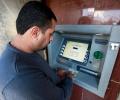
In a bid to check fraud, the Reserve Bank on Friday decided to permit all banks to introduce card-less cash withdrawal through ATMs.

Link your UPI app to a separate bank account or wallet that has only a limited sum.

Apart from SBI, UPI 2.0 partner banks are HDFC Bank, Axis Bank, ICICI Bank, IDBI Bank, RBL Bank, YES Bank, Kotak Mahindra Bank, IndusInd Bank, Federal Bank and HSBC.

While six of them have been held from Punjab, five were nabbed from neighbouring Haryana, and one from Uttar Pradesh.

India's flagship payment platform, the Unified Payments Interface (UPI), ended the 2022 calendar year on a high note as the volume of transactions touched a record 7.82 billion in December, amounting to Rs 12.82 trillion, again a record high. Data released by the National Payments Corporation of India (NPCI), the umbrella body for retail digital payments in the country, showed volume of transactions in December was up 7.12 per cent compared to November, while value of transactions was up 7.73 per cent during the same period.

'My job is to provide people with a bouquet of options they can choose from.'

Earlier this month, RBI told the Delhi high court that Google Pay is a third party app provider and does not operate any payment systems. Therefore, its operations are not in violation of the Payment and Settlement System Act of 2007.
.jpg)
Of the 11 licence holders, only eight remain in the fray as concerns about profitability and rising competition are making them think twice before jumping in.

Reserve Bank of India governor Shaktikanta Das on Monday said payments through UPI (unified payment interface) have grown exponentially in the past 12 months with daily transactions crossing 36 crore, which is up 50 per cent from 24 crore in February 2022. In value terms, these transactions are worth Rs 6.27 lakh crore, registering a growth of 17 per cent from Rs 5.36 lakh crore in February 2022, the governor told reporters while launching the Digital Payments Awareness Week at the RBI headquarters in Mumbai this afternoon. He also said the overall monthly digital payment transactions crossed over Rs 1,000-crore-mark each month during the past three months.

With over 80 million Unified Payments Interface (UPI) users, Amazon Pay, the payments business of e-commerce giant Amazon, has been growing at 40-50 per cent year-on-year (Y-o-Y), said Mahendra Nerurkar, chief executive officer (CEO) and vice-president (V-P), Amazon Pay India. "Leveraging just the micro peer-to-peer (P2P) transactions on UPI is not a business model. "While we have enabled those features, we do not chase monthly active users based on this.
The Reserve Bank on Wednesday allowed inbound travellers from G20 nations arriving at select airports to use the popular UPI for making payments in the country. Later, the RBI also proposes to extend the Unified Payments Interface (UPI) facility to travellers from all countries. UPI is a system that powers multiple bank accounts into a single mobile application, merging several banking features, seamless fund routing & merchant payments into one hood.
Unified Payments Interface (UPI) clocked over 6 billion transactions in July: the highest ever by India's flagship digital payments platform since its inception in 2016. UPI reported 6.28 billion transactions amounting to Rs 10.62 trillion, according to data released by the National Payments Corporation of India (NPCI), which operates the platform. Month-on-month, the volume of transactions was up 7.16 per cent and value increased 4.76 per cent.

As a volunteer you'll need to meet people and educate them about the benefits of going cashless by going digital.

Will allowing business correspondents to hawk insurance products help in reviving 5-lakh strong field agents as a viable channel?

In 2024, the Securities and Exchange Board of India (Sebi) implemented significant reforms, focusing on cooling down the derivatives segment, enhancing transparency and accountability in small and midsised enterprise (SME) listings, and deepening the fund management ecosystem.

'Most of the bot attacks have originated from outside India.' 'Our firewalls are resilient and withstood the attacks.'

Chief economic advisor V Anantha Nageswaran on Tuesday said Indian economy will grow at over 7 per cent, down from above 8 per cent of growth rate projected in January. He, however, said that the economic momentum and the animal spirits are "unmistakable". "India's own growth rates have come off the projections made in January down to about 7-plus per cent for the current financial year," Nageswaran said speaking at Global Fintech Fest event in Mumbai.
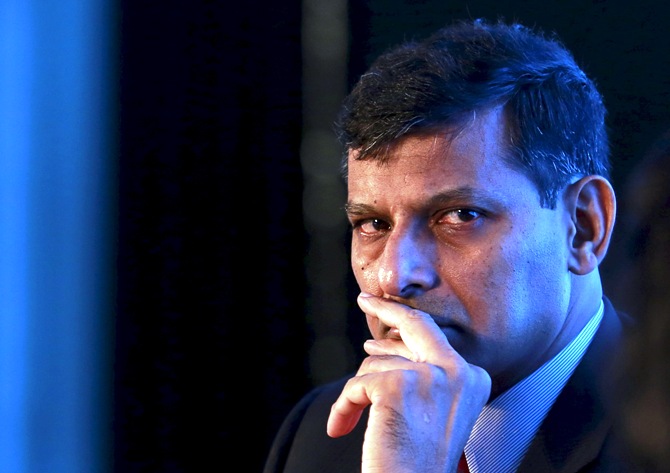
In the past, there have been instances of people getting fake e-mails in the name of RBI.

Nandan Nilekani complimented RBI on granting licenses to payments banks, calling it 'a great revolution'.

By the end of December 2021, India had 389 million users who did not have access to mobile Internet, while there were 765.8 million mobile Internet users in the country.
In this month itself, UPI can hit 2 billion transactions and by March 2021, it should reach 2.15 billion transactions in a month.

Debit card payments remained sluggish due to the surge in digital transactions after the pandemic, and the Unified Payments Interface (UPI) has emerged as the most popular mode of money transfer, particularly for small value transactions, according to RBI data. In July 2020, the total debit card spends stood at Rs 2.81 trillion, as compared to Rs 3.15 trillion in July 2023, reflecting a growth of 11.96 per cent. UPI spends have seen a whopping growth of 428 per cent, zooming from Rs 2.90 trillion to Rs 15.33 trillion during the same period, the data revealed.

The RBI has created a stunted business model by which payment banks are supposed to shoulder the noble objective of financial inclusion without being able to make much money.

The app uses a traveller's mobile GPS to predict a train's delay.

A merchant using the bank's merchant App, QR code, PoS or Payment gateways, across all segments, including electronics, apparel, grocery, stand to win assured cashback and prizes on volume build-up, EMI or digital transactions.

This will be done across five cities - Delhi, Bengaluru, Coimbatore, Bhopal, and Shillong. Thereafter, it will be scaled up and launched in 100 cities over a period of six months, said a senior government official.

The Reserve Bank of India's (RBI's) recent decision to allow credit cards for payments through the Unified Payments Interface (UPI) is likely to attract a merchant discount rate (MDR), said a top payment industry source. For smaller merchants, a subsidy for MDR could be provided. "With credit card-UPI linkage, UPI will not only be a payment instrument but also a lending platform. "How can banks lend without a commercial model? Also, the government has said MDR will be zero for payment products but not for lending products," the source said, indicating the MDR regime for credit card-linked UPI payments.

Friday will be a landmark day for domestic markets, with all the listed stocks entering the professed T+1 (trading plus one day) settlement cycle. About 200 stocks, which account for more than 80 per cent of India's market capitalisation, will be settled on a next-day basis, with effect from January 27. This will evidently complete the transition to the T+1 cycle that started in February 2022 with the bottom 500 stocks in terms of market value.

Cryptocurrency exchanges face issues with their current bank accounts.
